

Introduction: Beyond Words
At Pink Jinn, we’ve always believed that the Middle East and North Africa are best understood not through headlines or guidebooks — but through its people, its traditions, and the small, meaningful details of daily life. That’s why we’re so excited to team up with NaTakallam, an organisation redefining language learning by connecting learners directly with displaced native speakers for conversation-based lessons steeped in real culture. Because the truth is: language isn’t just vocabulary — it’s stories, rituals, and human connection that bring a place to life.
Sipping Culture: Coffee, Tea, and Connection
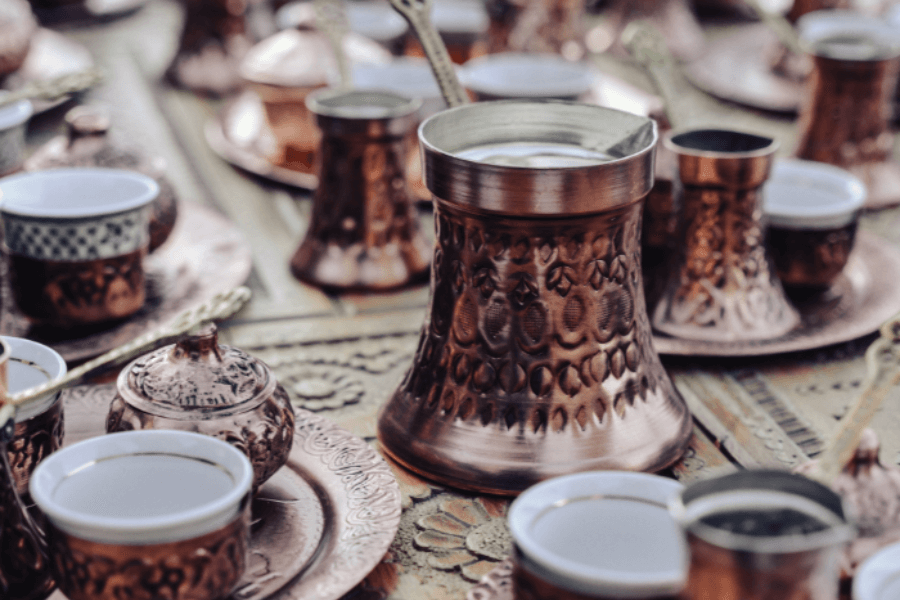
“My tutor taught me how to properly serve Lebanese coffee — it’s a ritual of respect and warmth.”
— NaTakallam learner
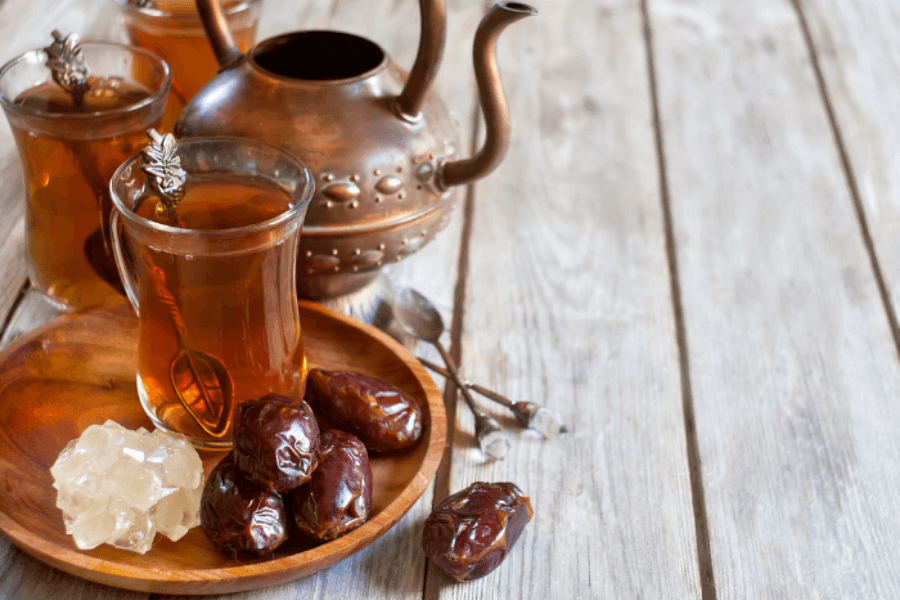
While Natakallam provides online classes, teachers (called language partners) and students often end up meeting in real life. Whether it is during a trip abroad to practice their language skills or simply because a friendship, not a class, has formed between language partners and students. It is in these moments, that both share their first traditional Arab tea of coffee together.
Coffee and tea both play a significant role in Arab culture – they’re an invitation, a gesture of hospitality, and a ritual of connection. Whether it’s deep, cardamom-laced Arabic coffee or fresh Moroccan mint tea, offering these drinks is seen as an act of hospitality and forming social bonds in the Arab world.
Curious to learn how to make your own Arab coffee or tea? NaTakallam’s language partners are always happy to share their favorite family recipes.
Expressions You Can’t Google: Proverbs, Poetry, and Personality
If you’re a Pink Jinn reader, you know language is rich with layers — and the best teachers are often locals. NaTakallam language partners share not only the “correct” phrases, but the quirks, slang, and poetry that add depth to conversation. At Natakallam, a total of 7 Arab dialects, from Palestinian to Egyptian, can be learned.
Examples:
- Arabic proverb: “الفرج مفتاح الصبر — “Patience is the key to relief.
- Syrian saying: “راسي على — “Literally “on my head,” meaning: gladly or with honor.
These small expressions carry stories, values, and humor that no app can teach. They come from real people with real experience in those countries, not from language books focusing on colloquial Arabic.
While Modern Standard Arabic is the main language used for media and bureaucracy in Arab countries, it is not used in everyday life. Particularly students from the Arab diaspora that learned to speak in the language of their ancestors through Natakallam, felt a strong sense of connection learning from fellow Egyptians, Iraqis, Syrians and more.
“As a Palestinian living in exile, my exposure to the dialect is very limited so I’ve always struggled with my Arabic. After being paired with Salwa who lives in Palestine I discovered an incredible dynamic between us. With me being in the diaspora and her being in Palestine, my language learning journey turned into one of heritage appreciation and cultural discovery, allowing me to approach the language in a non intimidating way. I would encourage any Palestinian in the diaspora that is struggling with their Arabic to learn from tutors living in the homeland as a way of strengthening their Arabic but also their sense of identity – NaTakallam is a great place to start!”
– Nadine, British Palestinian Diaspora Student, Palestinian Arabic
Beyond the grammar, beyond the vocabulary, it’s these human connections that make a new language — and the world — feel a little more like home.
Food for Thought: Traditions Around the Table
Food often sneaks into language lessons in the best way possible. From learning the names of spices and dishes to understanding the social etiquette around shared meals, NaTakallam sessions are a window into kitchens across the world.
This is particularly relevant in the Arab world: the Levantine region alone offers dozens of different appetizers (called ‘Mezza’), main dishes and desserts and all over the Arab world, mealtimes are a communal experience that connects family and friends.
For this very reason, Natakallam has in the past organized an Arabic cultural and language learning session focused on food. Hosted by our language partner Salwa Abu Ghaly, the course revolved all around introducing Maqluba (المقلوبة), a beloved Palestinian dish, while teaching Arabic vocabulary, cultural context, and food-related expressions from Palestine.
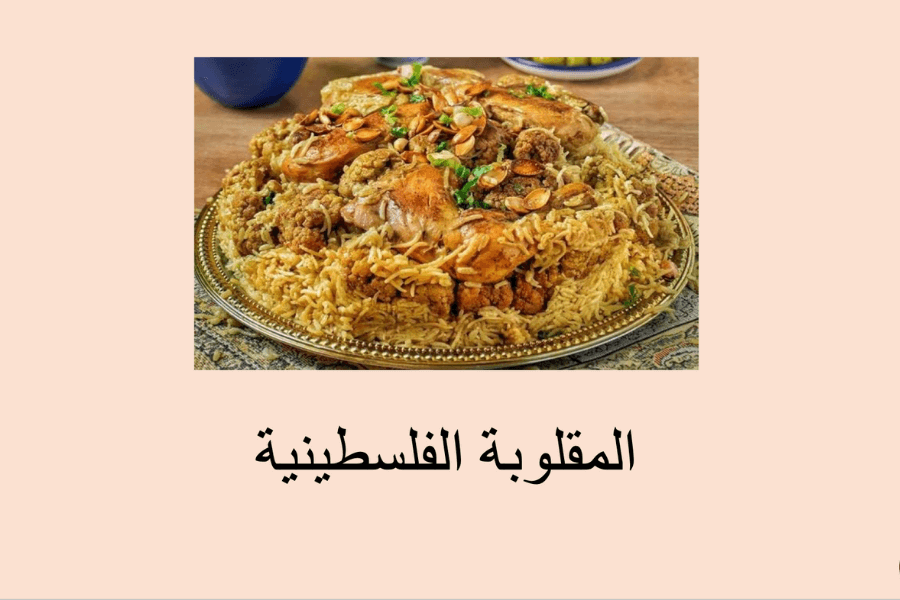
Sessions like these prove that we aim to teach language in interactive and culturally stimulating ways.
More Than Just Words: How Language Learning Builds Lifelong Bonds
Whether you’re learning Arabic to connect with your heritage, to travel meaningfully, or to better understand the complexities of the Middle East, NaTakallam offers something no app or textbook ever could: genuine human connection. Each conversation is a window into real lives, real stories, and sometimes, real-world impact.
Take Shahd, for example — a Palestinian language partner from Gaza, whose first student through NaTakallam, Kate, quickly became much more than just a language learner. Over time, their weekly conversations grew into a deep cross-border friendship. When Shahd and her family were forced to flee the war in Gaza, it was Kate — along with other friends and supporters — who helped launch a GoFundMe campaign to cover the impossible costs of evacuation. From navigating dangerous border crossings to renting her first safe place in Cairo, this circle of connection, built through language, became a lifeline.
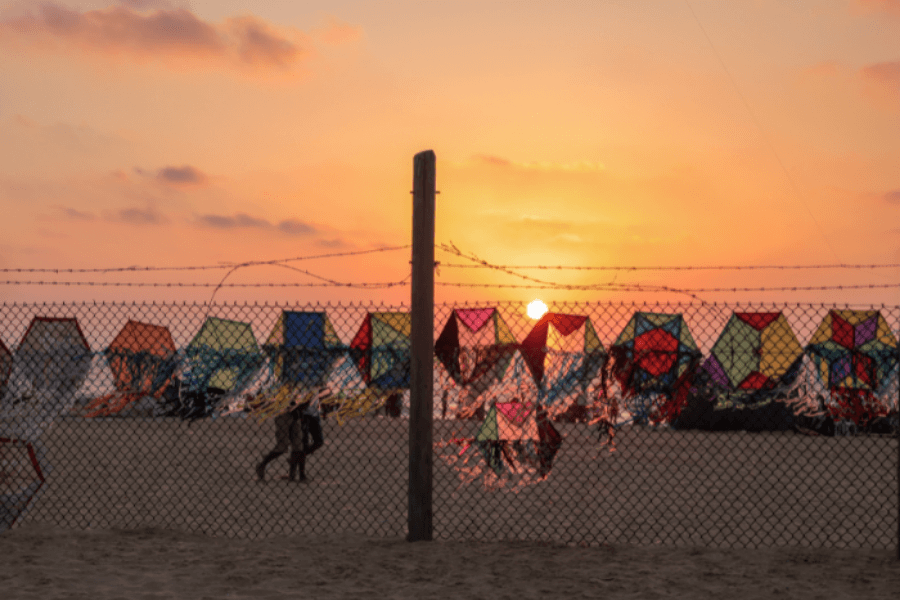
Stories like Shahd and Kate’s remind us that language learning isn’t just about mastering grammar or expanding your vocabulary — it’s about building bridges across divides, and sometimes, changing lives.
Final Sip: Join the Conversation
If you’re here at Pink Jinn, chances are you already appreciate that learning about culture is about more than sightseeing — it’s about listening. And there’s no better way to start than with NaTakallam.
Swap grammar drills for genuine connection, and let the language lead you deeper into the stories of the region. Get started with NaTakallam now!