

In a world increasingly marked by fragmentation, disconnection, and uncertainty, it is easy to feel overwhelmed, powerless and isolated. It’s precisely in these times that community proves its power — not just as a support system, but as a driving force.
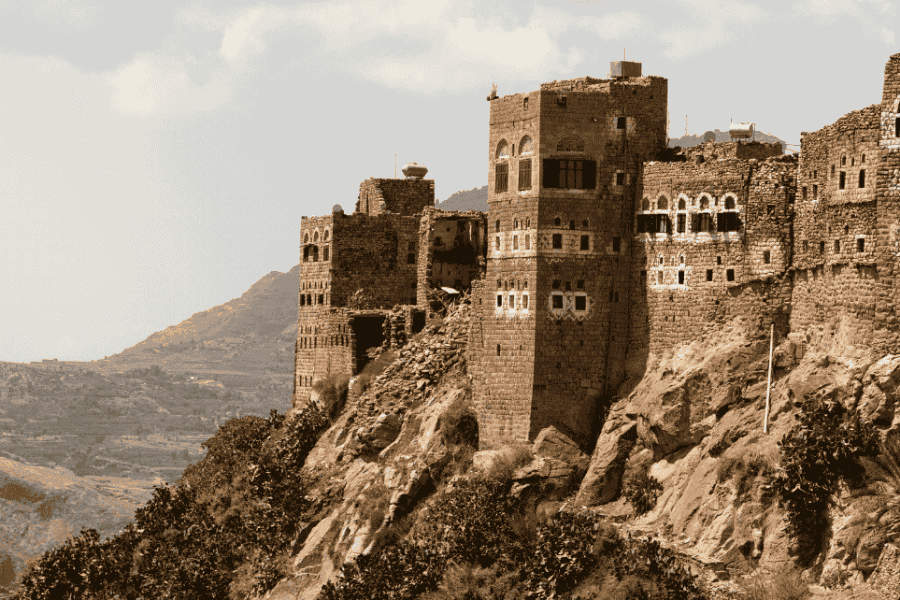
Here reflections from the ground — from Yemen, a country too often in the headlines for the wrong reasons — bombed, broken, and overlooked. Yet against all odds, where the world expects darkness, Yemen continues to build hope in the rubble. It continues to resist despair. And it continues to inspire me.
Why Community Matters — Now More Than Ever
Community — real community — isn’t just about people sharing a space. It’s about shared values, mutual support, and a sense of belonging. It’s where people feel seen, heard, and empowered to act — not alone, but together.
And let’s face it — today’s challenges are not simple. Poverty, inequality, conflict, environmental degradation … are too complex, too interconnected for governments or NGOs to tackle alone. These aren’t problems that can be fixed from the top down. That’s why community matters — more than ever.
This is especially true in the field of social entrepreneurship, where the mission isn’t just to solve problems, but to do so in ways that are sustainable, inclusive, and community led.
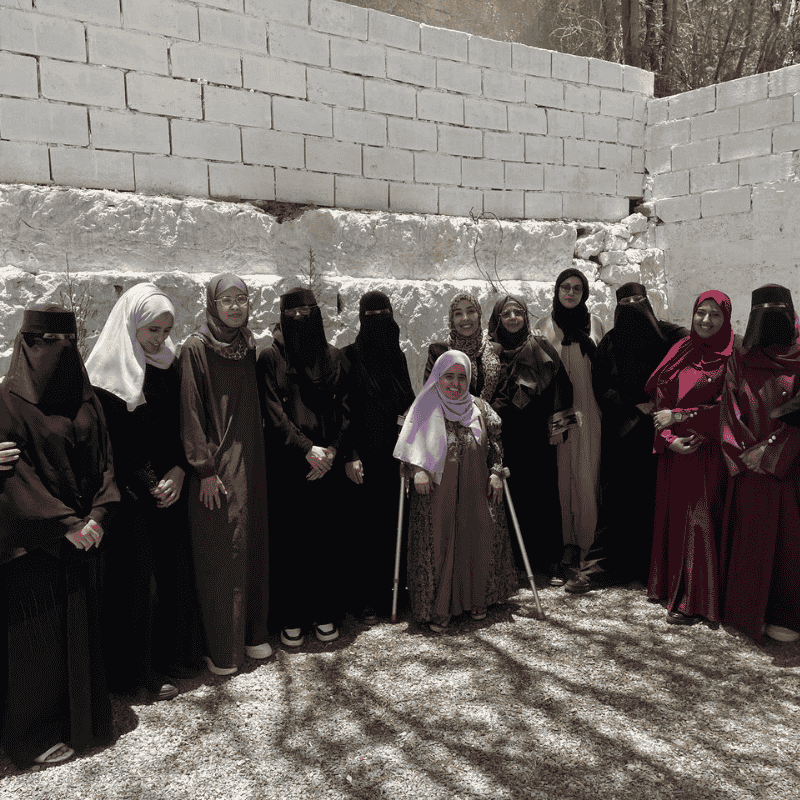
I had the chance to lead HER–Jisr, a program that empowered women across Yemen to create their own social entrepreneurship communities. Each participant worked in pairs within her local area to bring together changemakers, spark dialogue around pressing social issues, and turning those conversations into tangible solutions from the ground up.
What a transformative journey it has been!
Entrepreneurs Need Communities to succeed
Entrepreneurship — and especially social entrepreneurship — is not a solo journey. It’s not just about launching an idea or building a business. It’s contributing to something bigger: turning pain into purpose and transforming challenges into opportunities for change. That takes more than passion or a business plan. To succeed you need people. You need a community.
That’s exactly why we created HER–Jisr.
The goal was not just to deliver training or help launch small businesses — though that’s something we’ve done in past projects and remains critically important.
The mission here went deeper: to support women — especially those in Yemen’s most remote and underserved areas — to build their own local communities of social entrepreneurs.
Because women are often the backbones of their families — finding ways to adapt, survive, and hold things together in the harshest conditions. In times of war, their responsibilities only grow. They not only cared for their families but also found ways to generate income, support others, and keep life moving forward.
Participants began creating social entrepreneurship communities in their own neighbourhoods. Each brought a story of resilience and carried a vision for change. They chose the issues that mattered most in their communities — from waste management and employment to health and environmental protection — aligning organically with the UN Sustainable Development Goals.
From their remote villages, they became part of something bigger — something global. Their work resonated with challenges being faced in communities around the world.
They reminded us that local is global — that our struggles are interconnected, whether in Yemen, Europe, or anywhere in between. We are one world, facing similar issues, and the way forward is to come together as a community.
Because when we work together, change becomes possible.
When Social Entrepreneurship Becomes Collective Action
And what began as a program quickly evolved into something far more alive: a living ecosystem of learning, encouragement, and co-creation.
Through structured meetups, both online and in-person, and a culture of open dialogue, they created spaces where people could speak up, share their challenges, and work together toward solutions. These became pockets of hope, with each local community engaging at least 15 active members- men and women. And the energy is contagious. These communities are growing, inspiring others, and creating a ripple effect far beyond what we initially imagined.
As one participant described it:
“My community is like a family. We are passionate about the environment, and we decided to create a green community focused on tackling waste, recycling, and reducing pollution. Even with the limited resources we have, we pool them together and support one another. This is not just talk — it’s action. I feel stronger because we face the same struggles — and we face them together.”
Five Lessons from the Frontlines of Community Building and social entrepreneurship
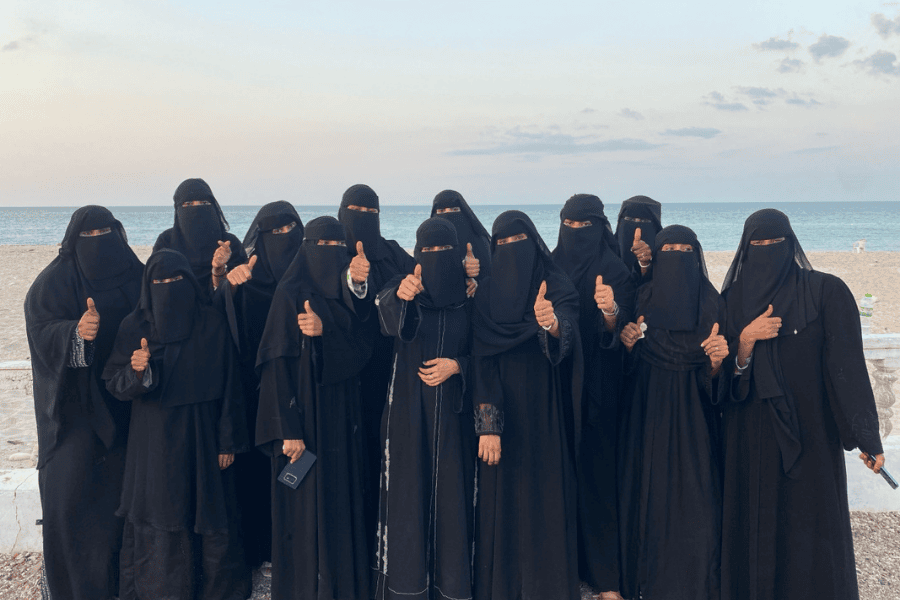
Today, more than a dozen HER–Jisr social entrepreneurship communities are up and running across Yemen. These women-led groups exchange regularly ideas to tackle the issues that matter most in their daily lives.
There’s no perfect recipe for building these kinds of communities, but here are the key lessons I carry with me — lessons that I hope will inspire and guide others working in places where everything feels broken, where systems are failing, and where social entrepreneurship isn’t a luxury — it’s a necessity to survive.
1. Community is Built, Not Found
You don’t stumble upon community. You build it — carefully, intentionally and with patience. We spent weeks exchanging and planting the foundations of social entrepreneurship: mindset, confidence, participation, and problem-solving. That groundwork was everything.
Community starts with trust. You have to open doors before you can open minds. You have to create a safe space before bold ideas can take shape. And safety isn’t just physical — it’s emotional and intellectual. It’s giving people the freedom to speak, to be vulnerable, to make mistakes, and to ask for help without fear or shame.
I still remember one of our early group sessions, when a participant hesitated to speak. At first, she wasn’t sure if her voice mattered. But slowly, through encouragement and shared experiences, she opened up — first about her fears, then about her ideas. By the third session, she was engaging on local solutions about school dropout in her community. That shift didn’t happen through instruction — it happened through trust.
2. Diversity is a Superpower
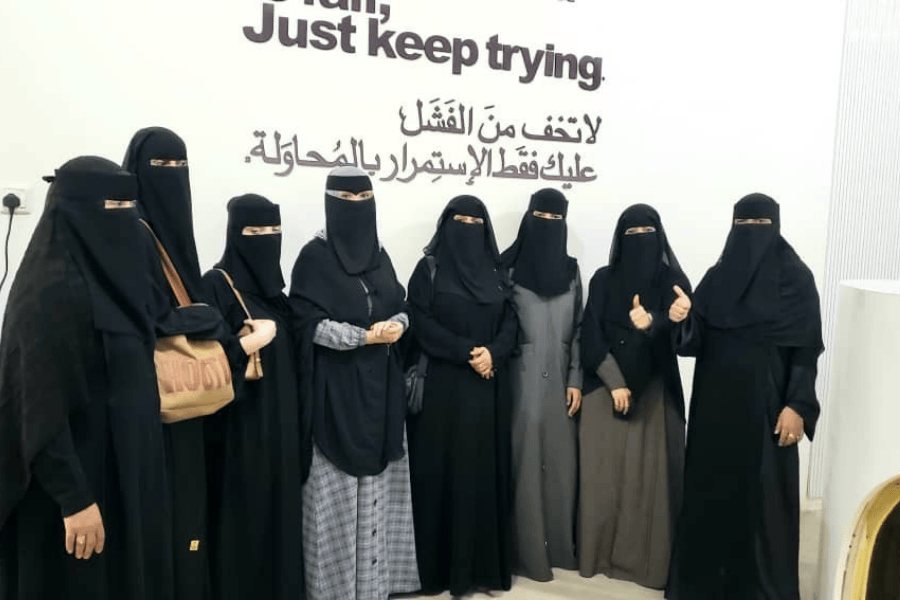
Our communities thrived because they were diverse — rural and urban voices, women from different professions and life experiences, each with their own dreams. That mixed sparked richer conversations and more creative grounded solutions to deeply local problems.
And nothing was more exciting — or more inspiring — than seeing women from places like the island of Socotra connecting with participants from Taiz, exchanging ideas, and realizing they were working on similar challenges. Different geographies, same determination.
That’s the power of diversity — it doesn’t divide, it multiplies possibility.
3. Collaboration Beats Competition
When we shift the mindset from “me” to “we”, we unlock the power of shared wisdom. Our communities became idea labs, not battlegrounds. We built a culture of generosity, openness, and support.
One standout moment came during a session where two participants — from different governorates — realised they were working on similar ideas related to women’s health. Instead of guarding their plans, they shared strategies, tools, they could both adapt to their local contexts. That’s the spirit we cultivated: not “whose idea is better?” but “how can we make all our ideas stronger, together?”
4. Community Requires Resources
Let’s be honest: building community requires resources. Energy and passion alone aren’t enough. Some participants couldn’t attend meetups simply because they lacked transportation, mobile data, or even electricity at home. Others joined calls with unstable connections or had to borrow devices just to stay involved.
I’ll never forget one participant who walked over an hour to reach a neighbour’s home with a better internet so she could join our online session. Another, joined via audio only, speaking from under a tree where she could find a signal. They showed up with determination — but the barriers they faced were real.
If we want to be truly inclusive, we must invest in the infrastructure that allows people to participate fully. That means budgeting for transportation, digital access and time. Because community doesn’t just happen. It’s built — and it needs to be supported.
5. You Need Both Online and Offline Touchpoints
Digital tools were essential for staying connected across regions — especially in a country like Yemen, where distances are vast and mobility is limited. WhatsApp groups, Zoom sessions, and voice notes allowed women to exchange ideas, stay engaged, and feel part of something bigger. But let’s be clear: nothing replaces the energy, warmth, and spark of face-to-face meetups.
These in-person encounters created real friendships, unlocked trust, and sparked entirely new ideas that wouldn’t have surfaced behind a screen. For many women, these were rare opportunities to step outside the home and that, in itself, is transformative.
Communities seed local Ecosystems
A thriving community can become the seed of a full ecosystem — where ideas flow, resources circulate, partnerships form, and innovation takes root locally.
When we cultivate strong communities, they naturally evolve into support networks — ecosystems where each group contributes something unique. One community may focus on education, another on health, another on recycling — but together, they reinforce and inspire one another.
And we’ve seen this in action.
One HER–Jisr community focused on upcycling plastic waste. Within weeks, another group began exploring how to adapt the idea to their context — using discarded fabric scraps to create useful products. The idea didn’t travel through a donor report or a workshop manual — it spread through people. Through trust, shared experience, and a common sense of purpose.
That’s what a living enabling ecosystem looks like: rooted in community, powered by connection, and growing through collaboration.
The Road Ahead: Deep Roots, Not Just Broad Reach
We face complex problems — ones that no single actor, sector, or solution can fix alone. What we need are cross-functional teams, networks that bring people together across divides, and spaces where ideas and resources can be shared freely. In a world obsessed with scale and numbers, it’s time to go deeper — not just broader.
The real solutions will not come from individuals working in isolation, but from communities that are deeply rooted, interconnected, and resilient.
A call to all, if we truly want long-term impact, we need safe spaces.
We need deep connection, not just big numbers.
We need listening circles. We need shared laughter, real conversations, and collective struggle.
And above all, we need to believe — again — in the quiet, persistent power of people coming together.
We need communities everywhere. We need more people who know how to hold space for others.
We need to invest in people, in relationships, in the messy, beautiful, imperfect work of doing it together.
Saoussen Cheikh
Saoussen Cheikh is a social innovator, human rights advocate, and founder of MENA-can, a hub supporting grassroots entrepreneurs across the MENA region. With over a decade of experience co-creating solutions in fragile communities, she combines academic expertise in Political Science and conflict studies with hands-on leadership of social enterprises and mentoring programs. Saoussen is also a storyteller, using media to spotlight justice, resilience, and locally led development.